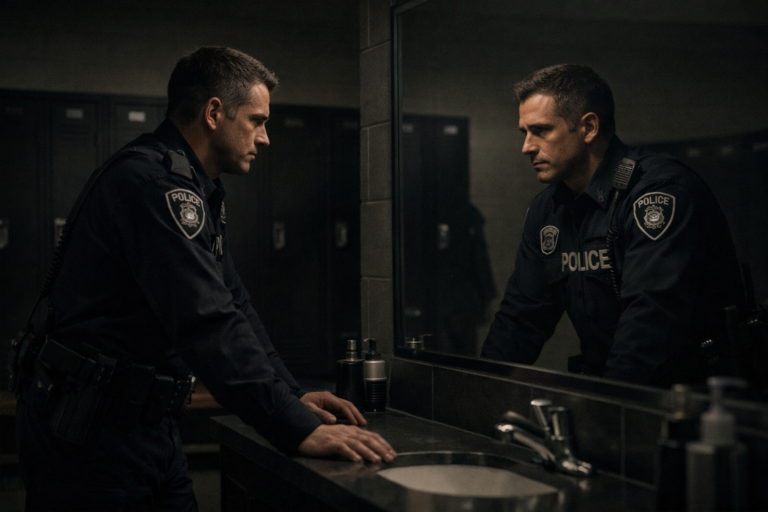
Hidden Toll
Understand the ways the job can quietly affect your mind, body, stress, and daily life.
What Comes Home
Short officer stories about how the job can impact stress, mood, burnout, homelife, and identity.
Running on Empty
Feeling worn down, losing energy, and pushing through without much left in the tank.
On Edge, Always Scanning, Can't Relax
Feeling keyed up, alert, and unable to fully shut it off even when the shift is over.
Stuff You've Seen That Stays With You
Calls, faces, or moments that stick with you longer than you want them to.
Taking the Job Home With You
Feeling irritable, distant, or not fully present with the people you care about.
Shutdown, Numb, Not Feeling Much
Feeling flat, disconnected, or not reacting the way you used to.
Feeling like this job has changed how you think, act, or show up outside of work.
Mind Still Running
Mental buildup from pressure, responsibility, and never really getting a reset.
Short Fuse, Snapping More Than You Want
Small things are setting you off more than they should, especially at home.
The Impact of Police Work
You’re still showing up, but it’s starting to impact your sleep, your mood, and life at home.
Not Sure How Much The Job is Affecting You?
See Where You Are At.

Running on Empty Check-In
A quick check-in focused on exhaustion, low energy, irritability, and feeling like the job is taking more out of you than you’re putting back in.
Sleep & Recharge Check-In
A quick check-in focused on sleep quality, winding down, staying asleep, and whether you’re actually recharging enough to feel steady, clear, and ready for the next shift.
When Alcohol Becomes the Reset
What starts as a quick way to unwind, sleep, or take the edge off can quietly become part of the toll.
It usually doesn’t start as a problem.
It starts as something that works.
Why This Can Sneak Up on You
Why This Can Sneak Up On You
After shift, your body is still on.
Your mind hasn’t shut off yet.
Alcohol feels like a fast way to bring it down.
It slows things down.
Takes the edge off.
Helps you fall asleep quicker.
That’s why it sticks.
Over time, your system can start relying on it
to do a job it was never meant to handle long-term.
What It Can Start Affecting
What It Can Start Affecting
What helps in the moment
can quietly make things harder over time.
- Sleep becomes lighter and less restorative
- You wake up more tired
- Irritability and short fuse increase
- Mood dips feel heavier or last longer
- Motivation and energy drop off
- Stress carries into the next day
- It becomes harder to fully reset between shifts
So the job takes more out of you…
and alcohol starts doing more of the coping.
Why It Turns Into a Cycle
Why It Turns Into A Cycle
You come off shift still wired.
You use something to bring it down.
You get some relief in the moment…
but your system doesn’t fully recover.
The next day starts a little more drained.
A little more on edge.
So you need something again.
Not because you’re doing anything wrong—
but because your system is trying to keep up
without a real reset.
What To Try Instead
When alcohol has been doing the job of unwinding, sleeping, or shutting it off, you need other ways to bring your system down.